
Rethinking Employee Benefits: Building Financially Healthy Workplaces
As most organizations wrap up another open enrollment season, leadership is taking of note of which benefits are seeing actual traction and which ones are checking the box. Is this a compliance requirement, or a strategic investment in financial health, workforce stability and safety?
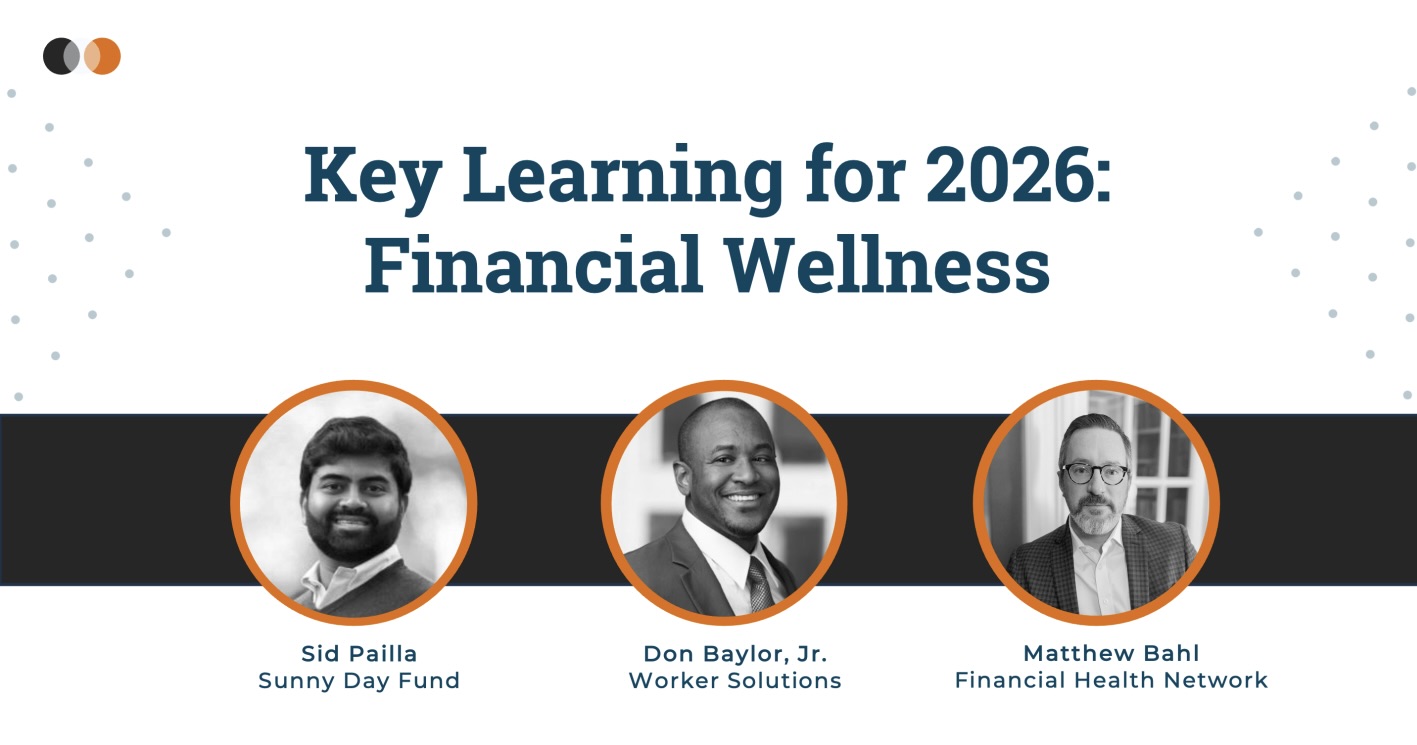
In a recent webinar, “Trick or Treat: Employee Benefits,” Matt Bahl, VP of Workplace Financial Health at the Financial Health Network, and Don Baylor, Jr., CEO of Worker Solutions, joined Sid Pailla, CEO of Sunny Day Fund, to discuss how employers can approach their compensation and benefits, or total rewards as some organizations prefer, to truly support financial health and resilience. The candid conversation debated design, access, and empathy in employee benefits – and how that meets the real and immediate needs of today’s workforce.
This blog post summarizes the webinar to prepare stakeholders vested in understanding and analyzing employee benefits as they enter strategy conversations in 2026.
From Perks to Purpose: What Really Improves Financial Health
The Financial Health Network team recently published Essential Benefits: A New North Star for Wage and Benefit Design, a thorough analysis of the magnitude and direction of impact of different employee benefits. As organizations continue to seek ROI efficiency in their benefit investments, the study provides an interesting framework to think about how to potentially understand the impact of those investments – and potentially maximize return.
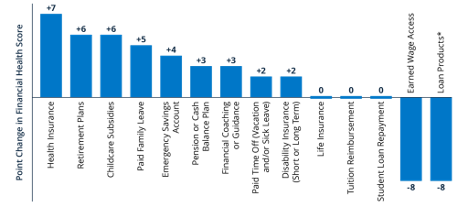
Key findings include:
- Wages are foundational. “They’re the threshold above which many things are possible — and below which many things are not,” Matt explained.
- Design is as important as access. For example, a high-deductible health plan without employer HSA contributions “is effectively the same as having no insurance at all.”
- Loyalty is the hidden ROI. Financially healthy employees are more engaged, productive, and loyal. “When people feel seen and supported,” Matt said, “that’s what drives real results.”
One question that did come up was around the “negative” impact of certain benefits such as earned wage access. Matt reminded the audience that this is simply a correlation, and it may be an indication that those who are currently financially vulnerable or coping may be simply engaging those types of benefits more to make ends meet.
Worker Solutions and the Power of Place
Don Baylor brought a policy and community lens to the discussion, sharing insights from the Worker Solutions’ Working Class Insights Forum, which in October 2025 had convened over 150 business leaders, policymakers, and advocates.
“One of our biggest takeaways,” Don shared, “was the mismatch of power between global corporations and local governments trying to protect working-class interests.” He highlighted the need to use technology, including AI, to enhance worker stability rather than replace it.
Worker Solutions is helping small and mid-sized businesses improve the alignment of benefits with workforce needs. “Middle-market employers have a unique opportunity to realign benefits around what truly matters — stability, savings, and long-term growth,” Don said. Their work is enriched by the data-driven insights from Lafayette Square Institute (LSI), which has conducted and compiled research in job quality, employee ownership, and more. LSI’s place-based analysis, such as their 535 Insights engine shown for example for Virginia’s 11th Congressional District, can also be helpful in understanding which types of financial issues may be most pressing for place-based employees.

When Public Benefits Fade, Employer Support Becomes Essential
Sid steered the conversation to a challenge that stemmed from the federal government shutdown in October and November 2025: for example, millions ofAmericans lost access to SNAP and other public benefits. “For employees earning below $32,000 a year, these programs can be the difference between stability and crisis,” he noted.
Matt observed that the loss of benefits has immediate consequences.“These aren’t people making poor financial choices,” he said. “They’re choosing between paying rent, keeping the lights on, or buying groceries.” He also emphasized the mental toll of navigating complex assistance programs — a strain that often spills over into workplace performance.
Both Matt and Don agreed that employers can fill part of the gap through thoughtful financial benefits. Emergency savings programs like Sunny Day Fund, living-wage strategies, and inclusive benefit design can all help build a more stable, engaged workforce.
“We’re living in an era of income disruption,” Don added. “Between layoffs, automation, and policy shifts, employees don’t know when the next shock will come. That’s why building financial resilience through benefits is so vital.”
Which Benefits Deliver Real Value?
The heart of the webinar was a “trick or treat” round robin, given the timing of Halloween, on common employee benefits and what to remember as future workplace strategies are formulated to drive both positive employee outcomes and good employer return.
Healthcare: “A treat,” Matt said, “but the bag it’s dispensed from is on fire.”Health coverage remains essential, but cost trends are unsustainable. Employers moving away from high-deductible plans or contributing to HSAs can make healthcare a true financial safety net rather than a liability.
Retirement: Don and Matt noted that retirement programs remain underutilized, especially among hourly and frontline workers. Participation rates hover around 20–25 percent without automatic enrollment, despite strong policy incentives under Secure 2.0. “Even small contributions make a difference,” Matt emphasized. “But the most common retirement balance today is still zero.”
Paid Sick Leave: Another clear treat as it protects the health of existing workers while making sure the sick employee comes back at full strength without having to worry about income shocks.
Childcare: As parents, the three panelists also agreed that childcare benefits are particularly helpful for younger parents to continue to attend work with minimum disruptions.
Financial Wellness: All agreed that financial wellness benefits are helpful, but some are more engaging and more immediately impactful than others. For example, emergency cash grants can deliver immediate value but only to a limited population, whereas financial coaching can serve a broader population.Financial education-only programming, unfortunately, does not work, the panel concurred.
Earned Wage Access and Small Dollar Loans: While these solutions have been helpful to meet immediate needs, more sustainable solutions are required to ensure employees are able to navigate the intrinsic financial shock in the next paycheck and beyond.
Emergency Savings: A clear bright spot. Sid highlighted that even modest automatic savings can help employees weather financial shocks. “It’s not just about money,” he said. “It’s about providing peace of mind and a sense of dignity when life happens.”
Building a Better Benefits Future
The panel agreed that the next evolution of employee benefits must focus on measurable outcomes — improved financial health, stronger retention, and deeper trust between employers and their people.
“Financial health isn’t just a personal matter — it’s a workplace strategy,” Sid concluded. “When employees thrive, businesses do too.”
Watch the full webinar replay.
Learn more about how Sunny Day Fund helps employers build financial resilience through workplace emergency savings programs at sunnydayfund.com.